
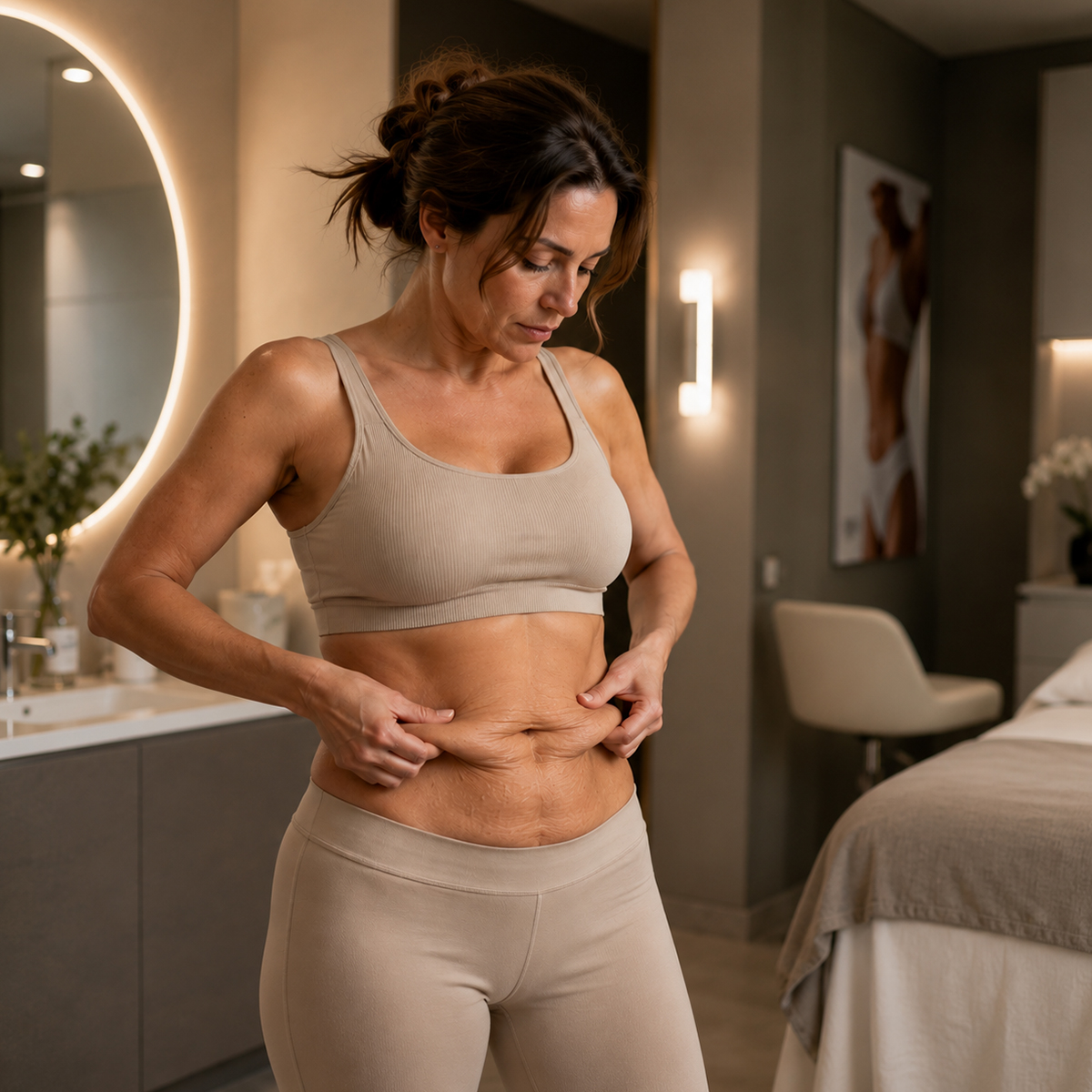
Losing a significant amount of weight is a major achievement. However, many patients find that after the weight is gone, something else remains, loose, excess skin that doesn’t adapt to the new body shape. This can affect not only appearance, but also comfort and confidence.
Why Does Loose Skin Happen?
When the body gains weight, the skin stretches over time. After weight loss, especially when it’s rapid or significant, the skin may not fully contract back. This depends on several factors, including:
- Age
- Skin elasticity
- Amount of weight lost
- Duration of weight gain
In many cases, the skin simply cannot return to its previous firmness on its own.
Can Exercise or Skincare Fix It?
This is one of the most common questions. While exercise can improve muscle tone and overall body composition, it does not remove excess skin. Similarly, creams and skincare products may improve skin quality slightly, but they cannot tighten large amounts of loose tissue.
When skin laxity is mild, non-invasive treatments may help to some extent. However, for moderate to severe cases, more advanced solutions are usually required.
Non-Surgical Treatment Options
For patients with mild skin laxity, certain non-surgical treatments may provide improvement. These include:
- Radiofrequency-based skin tightening
- Ultrasound treatments
- Collagen-stimulating procedures
These options work by encouraging the skin to contract slightly and improve its texture. However, results are usually limited and gradual.
Surgical Solutions: Body Contouring Procedures
When loose skin is more pronounced, surgical options are often the most effective solution. These procedures are designed to remove excess skin and reshape the body. Common options include:
- Tummy tuck (abdominoplasty)
- Arm lift
- Thigh lift
- Full body contouring procedures
In many cases, these treatments are personalized and may be combined depending on the patient’s needs.
Why a Personalized Plan Matters
Loose skin does not appear the same for everyone. Some patients may have concerns mainly in the abdomen, while others experience it in multiple areas such as arms, thighs, or back. This is why treatment should always be tailored. A well-planned approach ensures that the results are balanced and natural-looking.
Emotional Impact Is Also Real
Beyond the physical aspect, loose skin can affect how patients feel about their transformation. After achieving weight loss goals, it can be frustrating to still feel uncomfortable in your own body. Addressing loose skin is often not just about aesthetics, but about completing the transformation.
Loose skin after weight loss is common, and in many cases, it cannot be resolved with lifestyle changes alone. Understanding your options allows you to make informed decisions about the next step. With the right approach, it is possible to achieve a result that reflects the effort you’ve already made.