
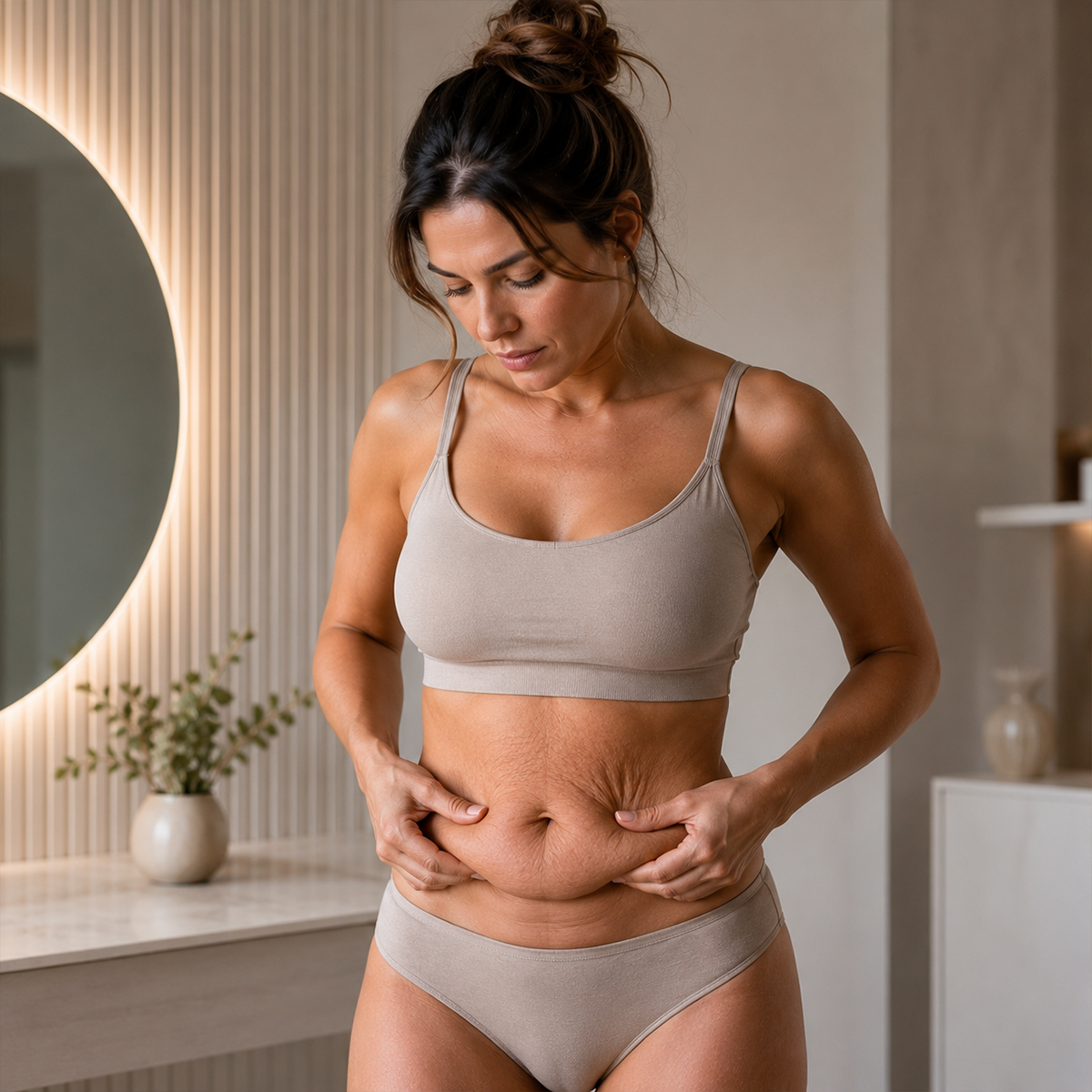
Losing weight is a major achievement that can improve overall health, mobility, and confidence. However, for many people, significant weight loss brings an unexpected challenge: loose or sagging skin.
While the number on the scale may change, the skin does not always adapt at the same pace. As a result, some individuals find themselves dealing with excess skin in areas such as the abdomen, arms, thighs, or neck. Understanding why loose skin occurs can help patients make informed decisions about their body contouring options after weight loss.
Why Doesn’t Skin Always Tighten After Weight Loss?
Skin is designed to stretch and contract. However, its ability to return to its original shape depends on several factors.
When the body gains weight, the skin expands to accommodate increased fat volume. If this stretching occurs over a long period of time, the skin’s elastic fibers may become damaged. After significant weight loss, the fat beneath the skin decreases, but the skin may not have enough elasticity to shrink completely. This can result in loose or hanging skin in various areas of the body.
Factors That Affect Skin Elasticity
Not everyone experiences loose skin to the same degree. Several factors influence how well the skin can adapt after weight loss.
Age
As we age, the body naturally produces less collagen and elastin, two proteins responsible for skin firmness and flexibility. Younger patients often have greater skin elasticity than older individuals.
Amount of Weight Lost
In general, the more weight a person loses, the more likely they are to experience excess skin. Patients who have lost a significant amount of weight, particularly after bariatric surgery, may notice more pronounced skin laxity.
Duration of Excess Weight
The longer the skin remains stretched, the harder it may be for it to return to its original position. Skin that has been expanded for many years may have reduced elasticity.
Genetics
Genetics also play an important role in determining skin quality and elasticity. Some individuals naturally retain better skin firmness than others.
Lifestyle Factors
Factors such as smoking, sun exposure, hydration, and nutrition can all influence skin health and recovery. Maintaining a healthy lifestyle may support overall skin quality.
Where Does Loose Skin Commonly Appear?
Loose skin can develop in several areas following major weight loss. The most common areas include:
- Abdomen
- Upper arms
- Thighs
- Breasts
- Neck and jawline
- Lower back
The degree of skin laxity varies from person to person.
Can Exercise Remove Loose Skin?
Exercise is extremely important for overall health and can help build muscle tone beneath the skin. However, it is important to understand that exercise does not remove excess skin. While strengthening muscles may improve body shape, excess skin itself cannot be significantly reduced through exercise alone.
Can Loose Skin Improve Naturally?
In some cases, mild skin laxity may improve over time, particularly in younger individuals with good skin elasticity. Maintaining stable weight, staying hydrated, and following a healthy lifestyle may support the skin’s natural recovery process. However, significant excess skin often requires additional treatment if a patient wishes to address it.
Body Contouring After Weight Loss
For patients who have achieved their weight-loss goals but remain concerned about excess skin, body contouring procedures may be considered.
Depending on the area being treated, options may include:
- Tummy Tuck (Abdominoplasty)
- Arm Lift (Brachioplasty)
- Thigh Lift
- Breast Lift
- Body Lift Procedures
These treatments are designed to remove excess skin and improve body contours while creating a more balanced appearance.
The Importance of Timing
Before considering body contouring surgery, patients are generally advised to reach a stable weight. A stable weight helps surgeons evaluate the body more accurately and may contribute to longer-lasting results. Patients are often encouraged to maintain their target weight for several months before pursuing surgical options.
Realistic Expectations Matter
Body contouring procedures can significantly improve body shape and address excess skin, but they are not weight-loss procedures. The goal is to refine the results of weight loss and help patients feel more comfortable in their bodies. A personalized consultation is essential for determining the most appropriate treatment approach.